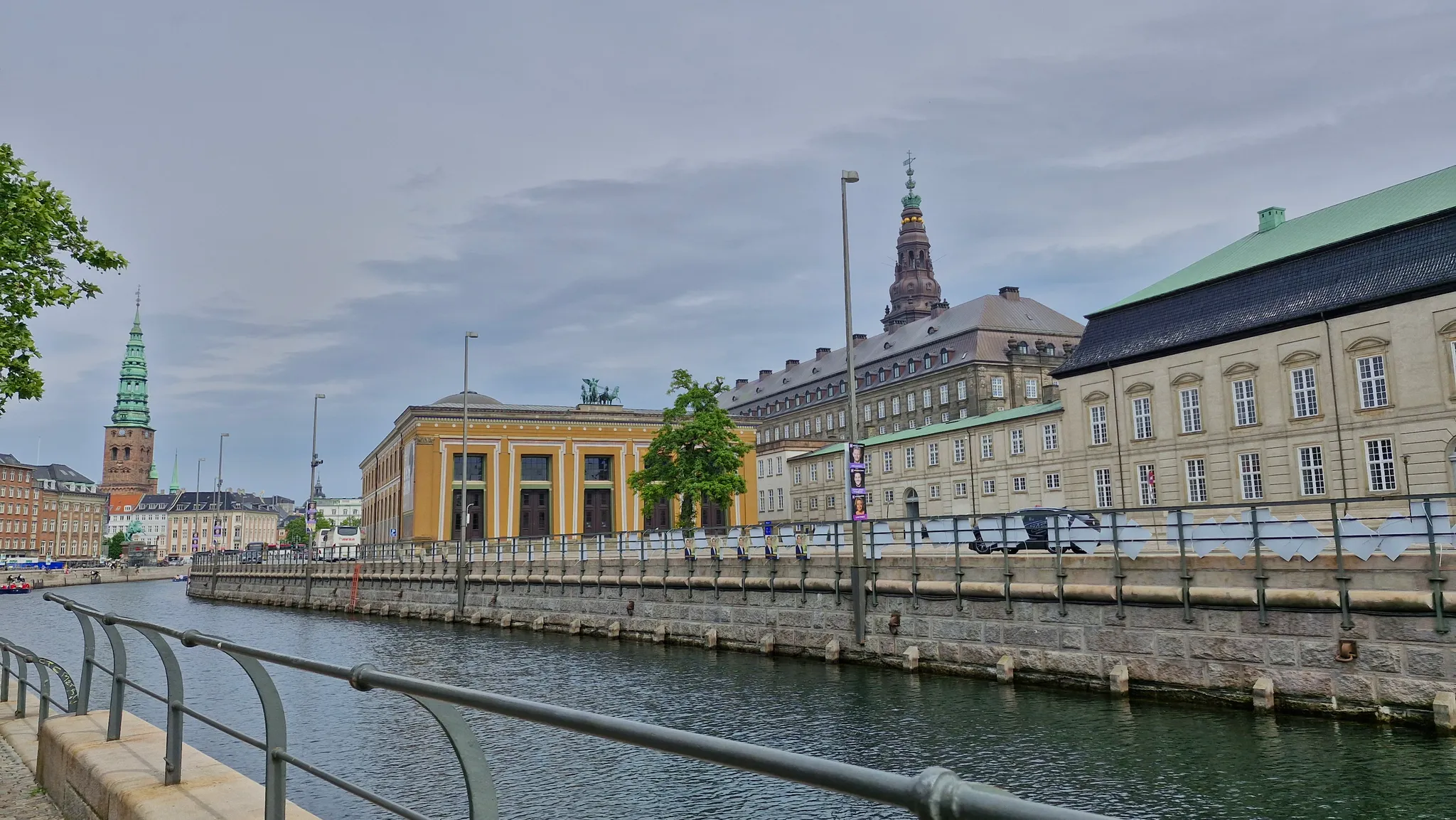
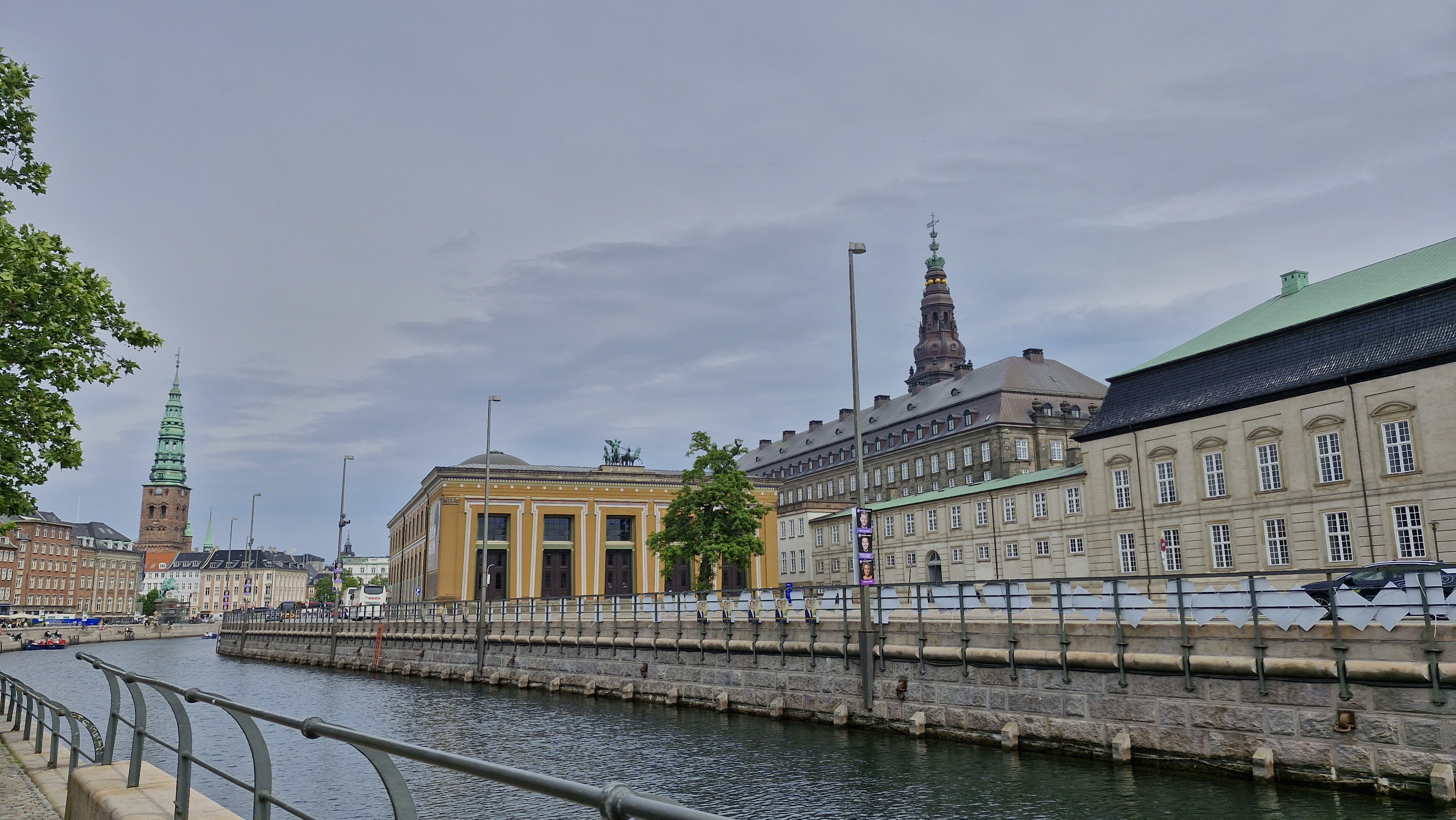
Christiansborg Palace
Christiansborg Palace, located on the island of Slotsholmen in central Copenhagen, houses the Danish Parliament, the Prime Minister's Office, and the Supreme Court. The palace is a blend of architectural styles, reflecting its long and complex history which includes royal residences, administrative buildings, and even ruins from earlier structures. Today, parts of the palace are also used by the Danish Monarchy for state functions, highlighting its continued importance in Danish political life. The current palace is the third on the site, after fires destroyed the previous iterations.
📍Copenhagen
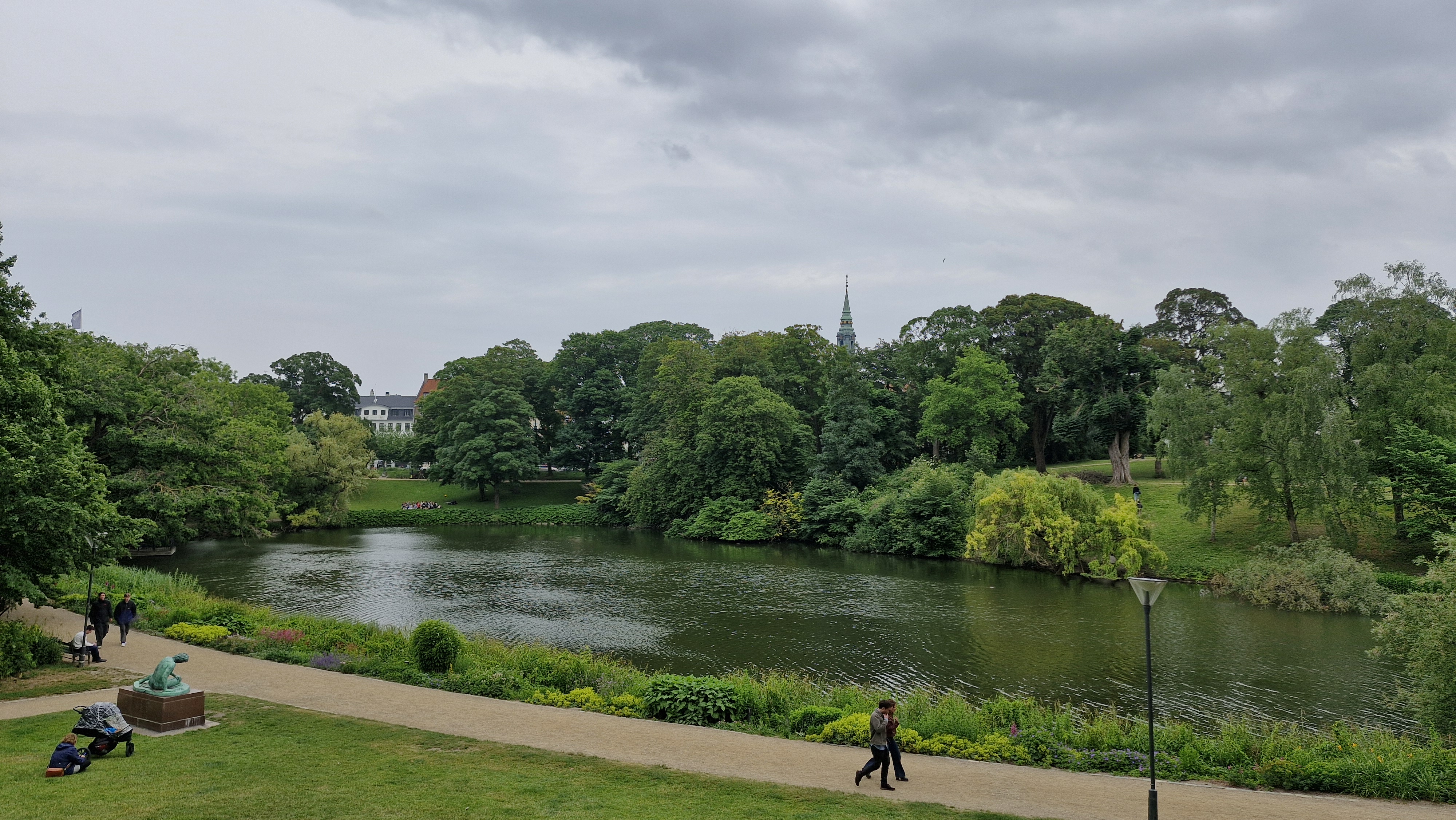
Ørstedsparken
Ørstedsparken is a public park in Copenhagen, Denmark. It was created in the late 19th century on the former grounds of the city's fortifications. The design includes a large pond, winding paths, and lush greenery, reflecting the English garden style. It serves as a popular recreational area in the heart of the city.
📍Copenhagen
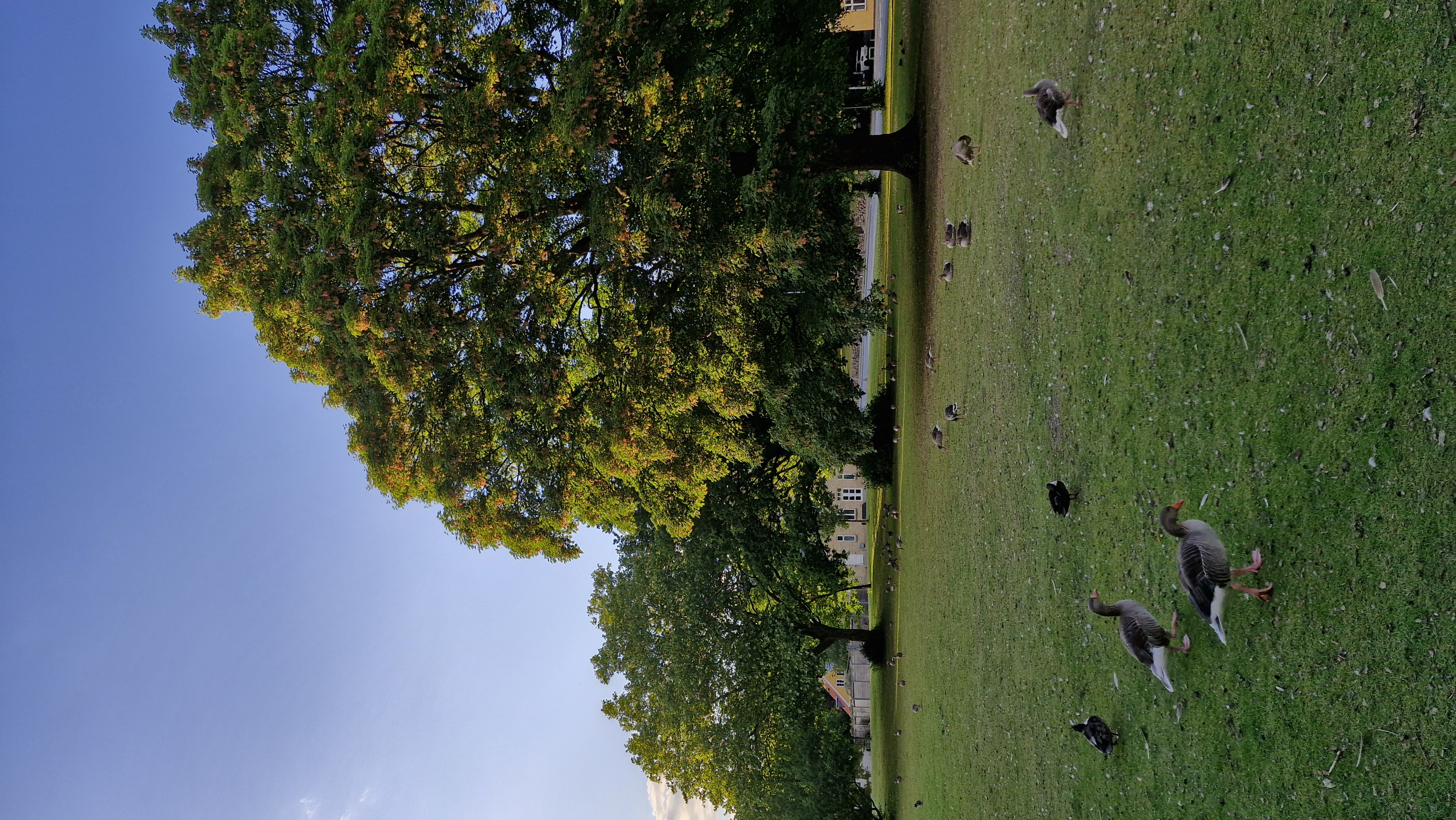
Greylag Goose (Anser anser)
The Greylag Goose is a common sight in Denmark, both as a breeding bird and during migration. It is the ancestor of most domestic geese and can be identified by its large size, orange legs, and pink beak. These geese are highly adaptable and can be found in various habitats, including wetlands, agricultural areas, and urban parks. They primarily feed on grasses and aquatic plants, and their populations have greatly increased in recent decades due to protection and favorable conditions.
📍Null
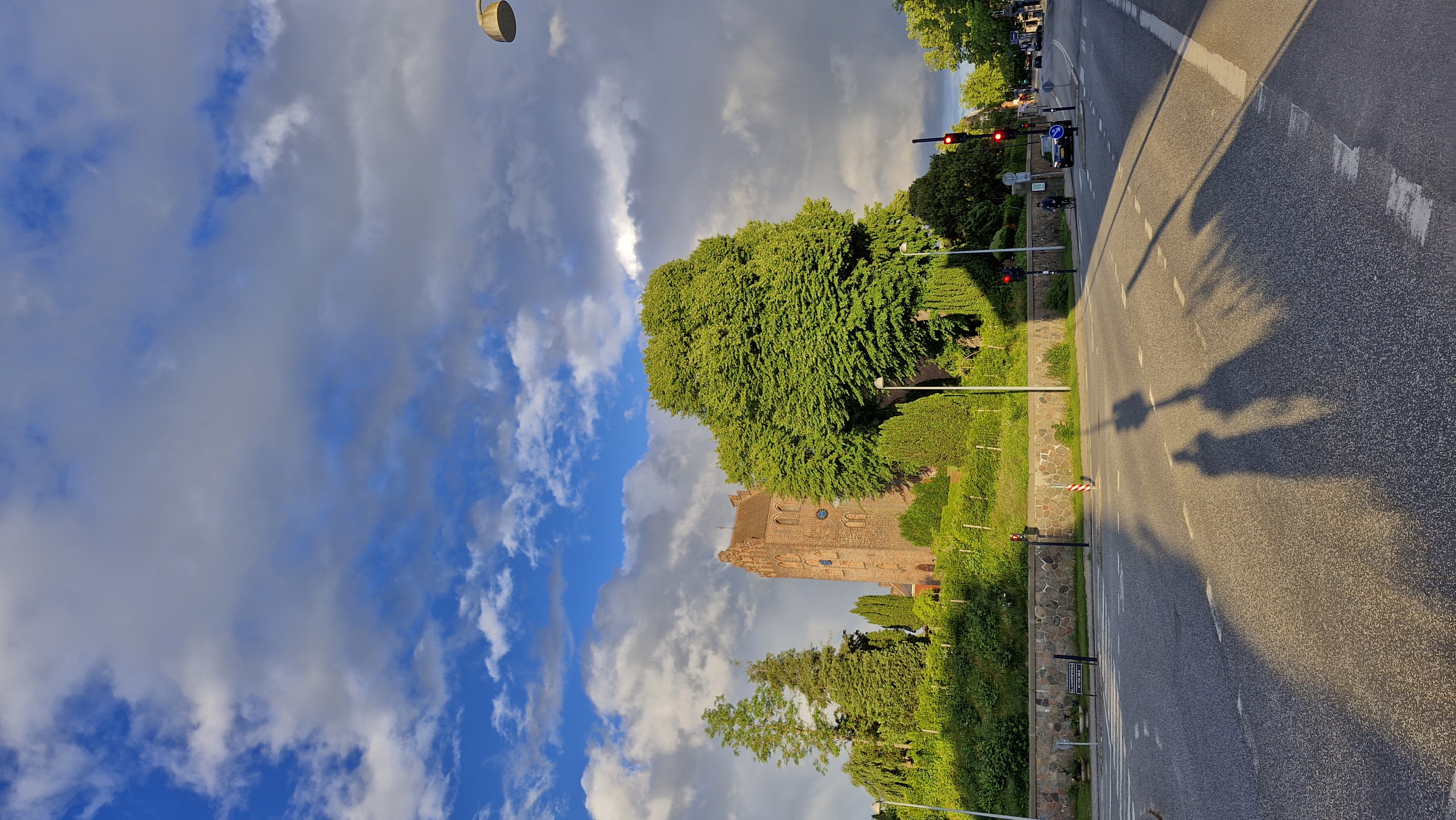
Sankt Nicolai Kirke, Bornholm
Sankt Nicolai Kirke, also known as Svaneke Kirke, is a notable church located in Svaneke, Bornholm, Denmark. Originally dedicated to Saint Nicholas, the patron saint of sailors, it reflects the town's maritime history. The church's construction dates back to the 14th century, featuring characteristic Gothic architecture common in the region. Its prominent tower served as a landmark for seafarers navigating the Baltic Sea.
📍Bornholm
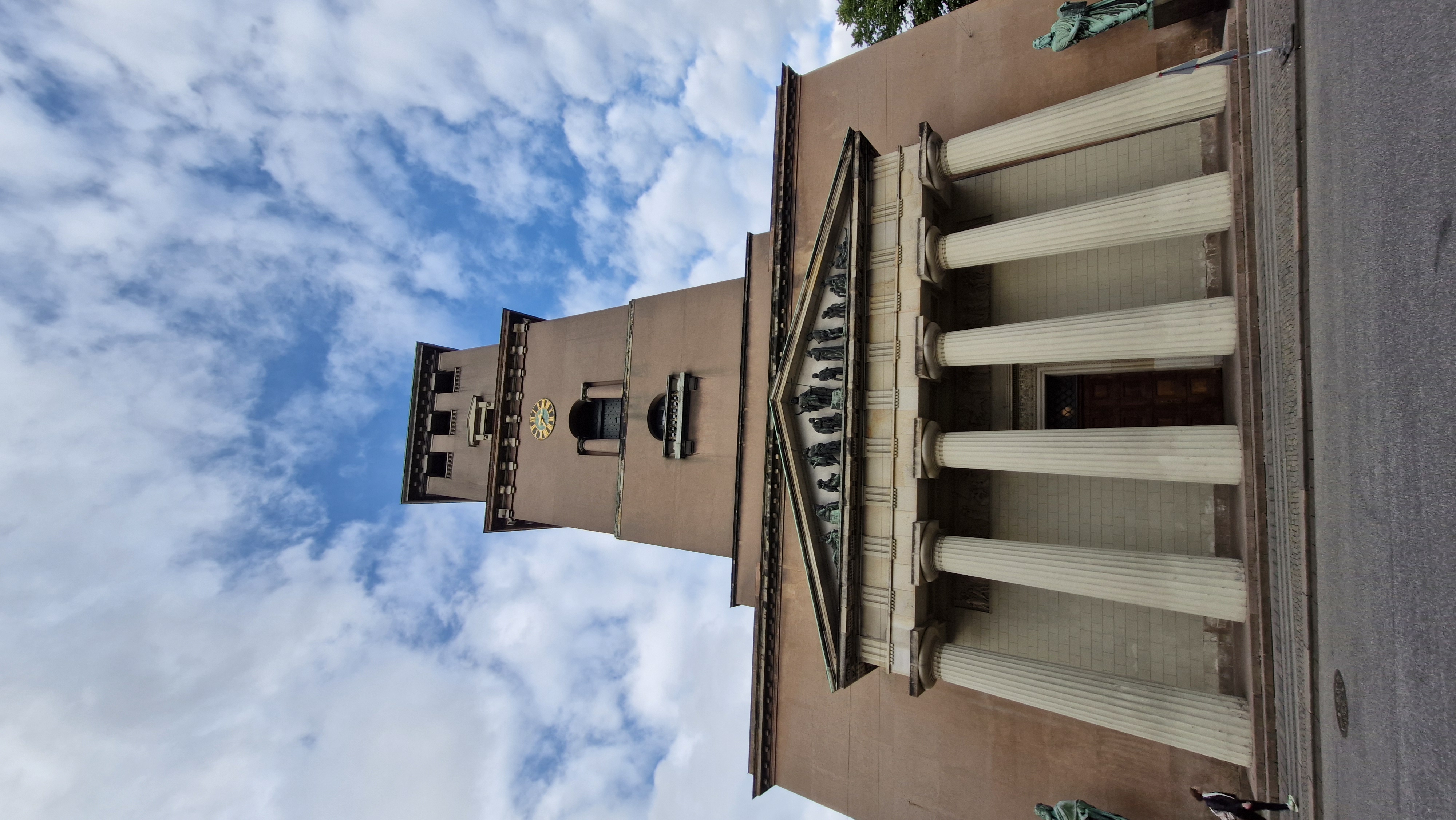
Grundtvig's Church
Grundtvig's Church, located in Copenhagen, is a distinct example of expressionist church architecture. Completed in 1940, its design is heavily influenced by Gothic styles as well as traditional Danish brick architecture. Its most striking feature is the large, towering façade, which evokes the image of organ pipes.
📍Copenhagen
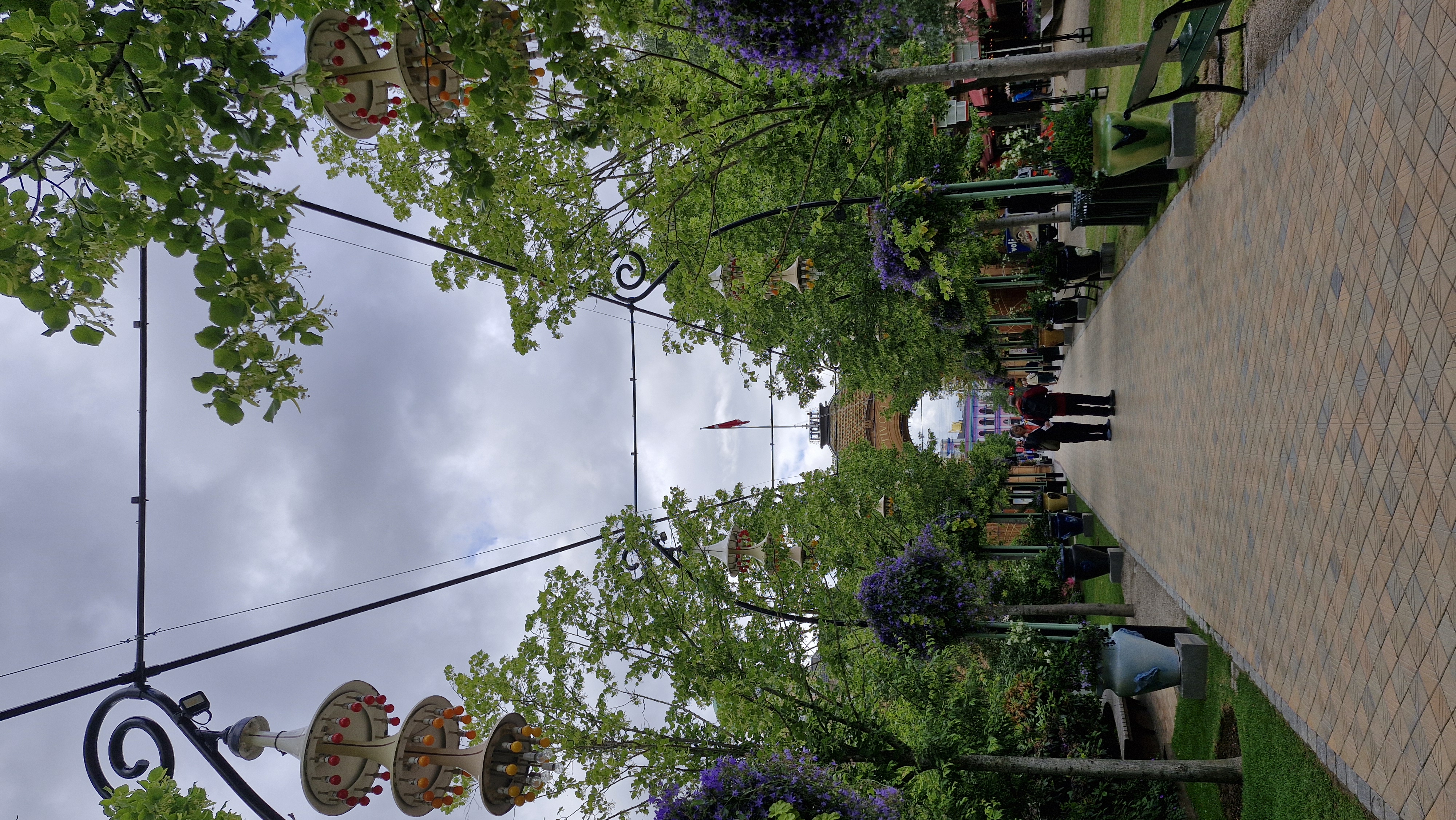
Tivoli Gardens in Copenhagen opened in 1843 and is the second-oldest amusement park in the world. Georg Carstensen, its founder, obtained permission to create the park by convincing King Christian VIII that diverting the public's attention with leisure would distract them from politics. The park is particularly known for its lush gardens, picturesque lake, and unique architecture that blends exotic styles with Danish sensibilities. It continues to be a major attraction in Denmark, drawing millions of visitors each year.
📍Copenhagen
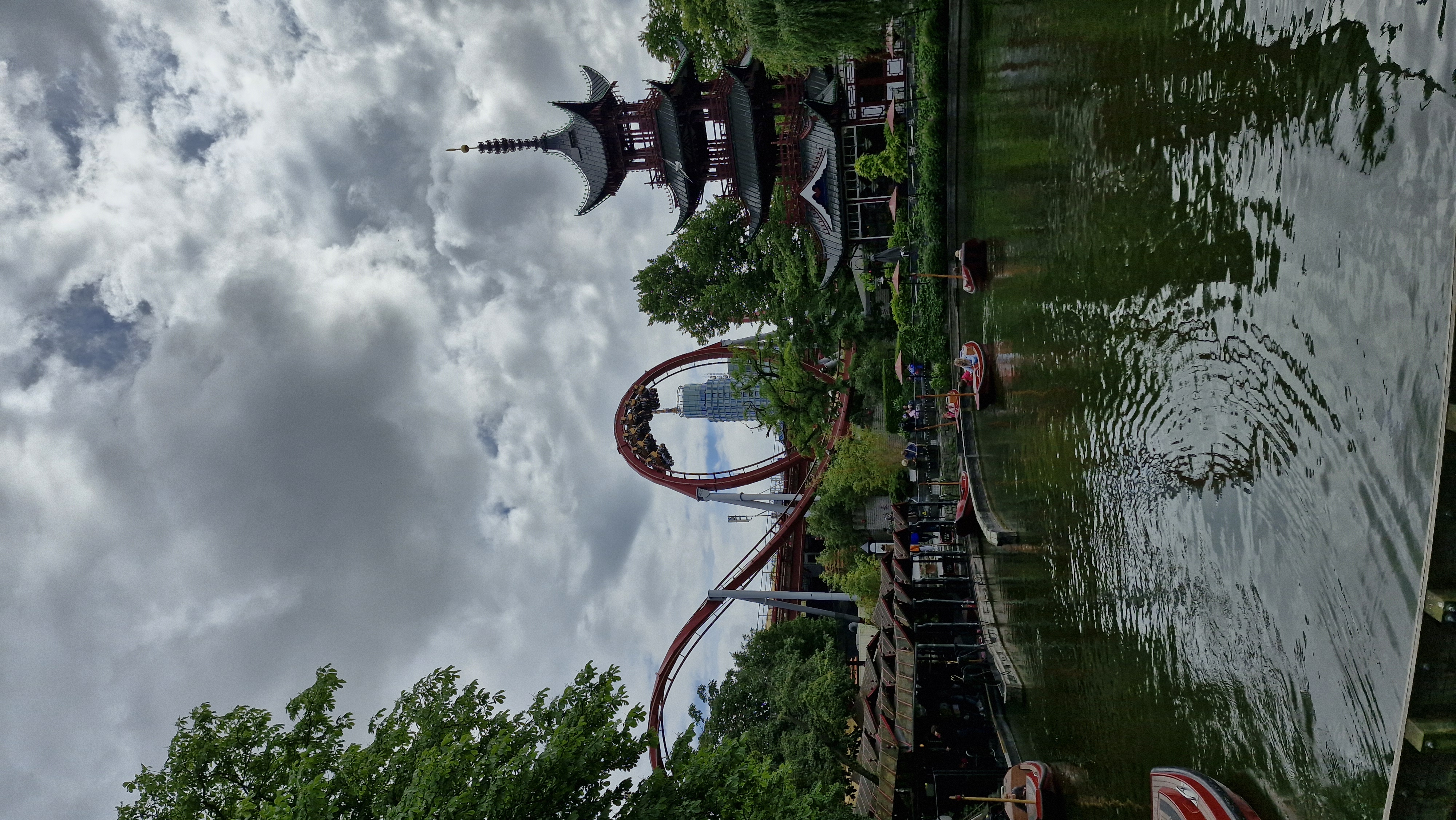
The Chinese Tower, Tivoli Gardens
The Chinese Tower, or 'Kinesertårnet' in Danish, is an iconic Oriental-style structure within Tivoli Gardens, Copenhagen. Originally built in 1900, the tower has been rebuilt and redesigned multiple times. The design is inspired by traditional pagoda architecture from China and other parts of East Asia, providing an exotic and visually striking landmark within the amusement park's fantasy landscape.
📍Copenhagen
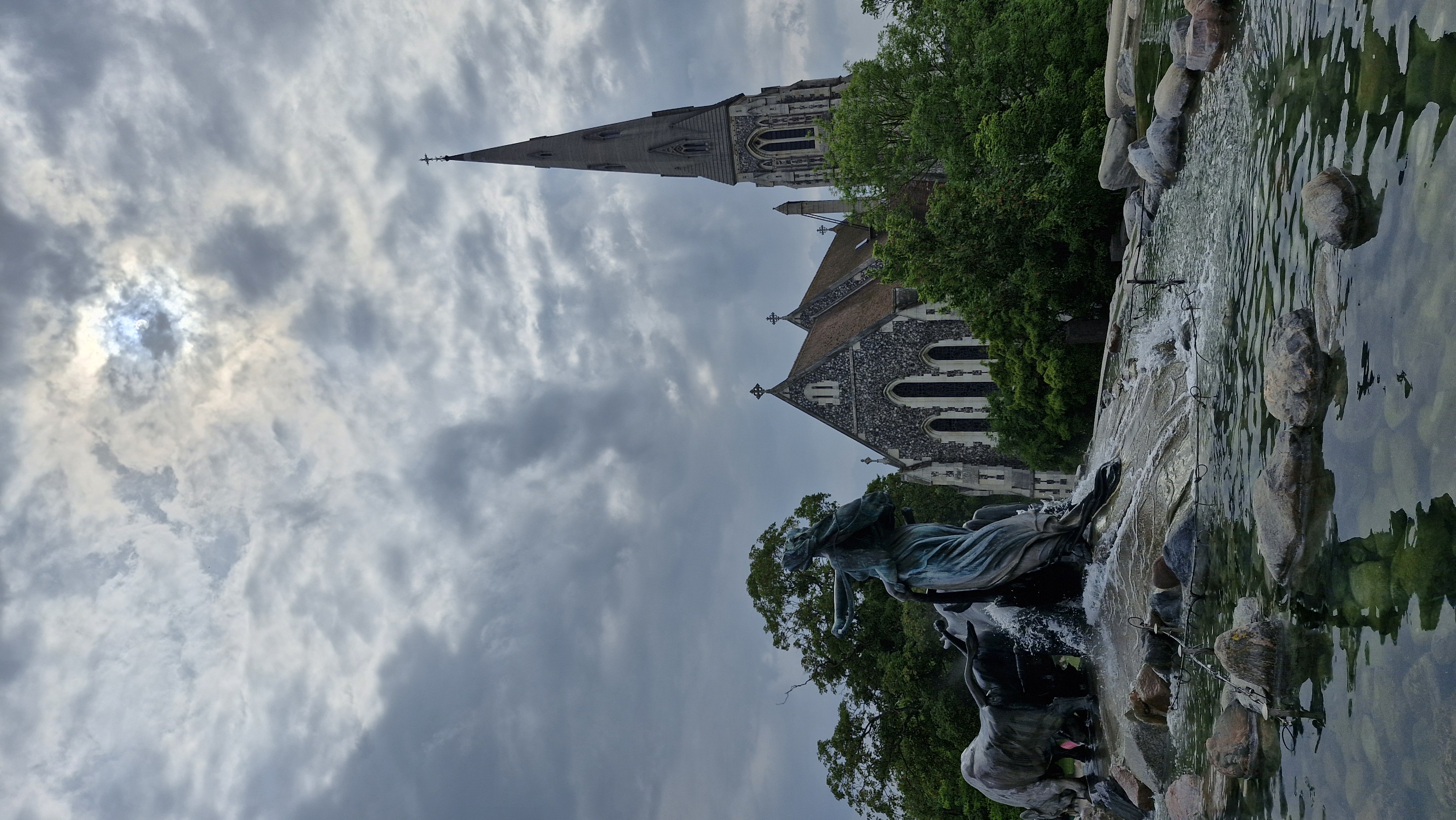
Gefion Fountain
The Gefion Fountain, located in Copenhagen, Denmark, depicts the Norse goddess Gefjun plowing the land with her oxen-turned-sons. This large and impressive fountain was designed by Anders Bundgaard and completed in 1908. It tells the myth of how Zealand, the island on which Copenhagen sits, was created from land Gefjun plowed from Sweden and moved to Denmark.
📍Copenhagen
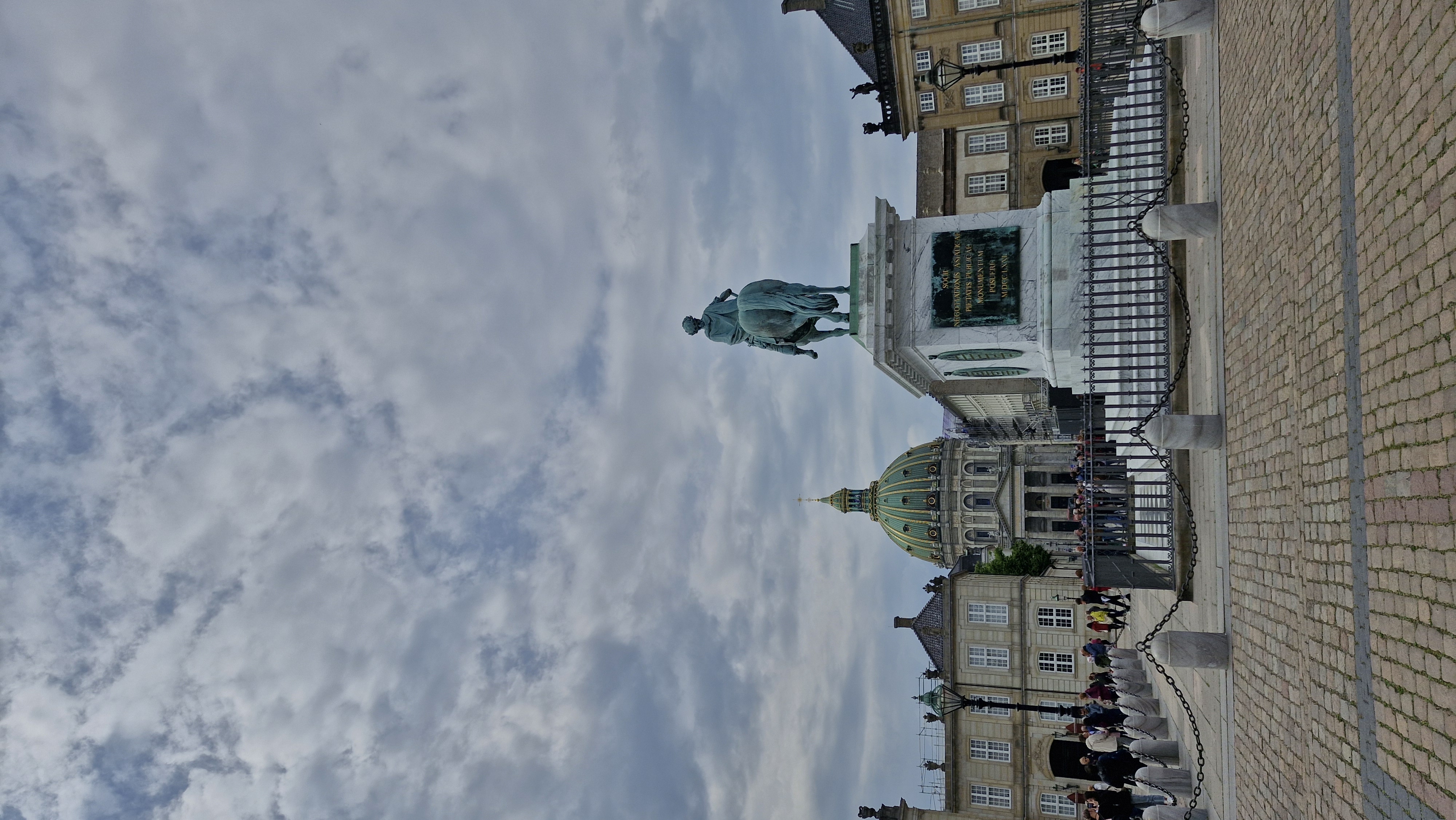
Amalienborg Palace
Amalienborg Palace is the winter residence of the Danish royal family in Copenhagen. It actually consists of four identical palace facades around an octagonal courtyard. In the center of the square stands a monumental equestrian statue of King Frederick V, the founder of Amalienborg. The palace complex dates back to the 1750s and represents some of the finest Rococo architecture in Denmark.
📍Copenhagen
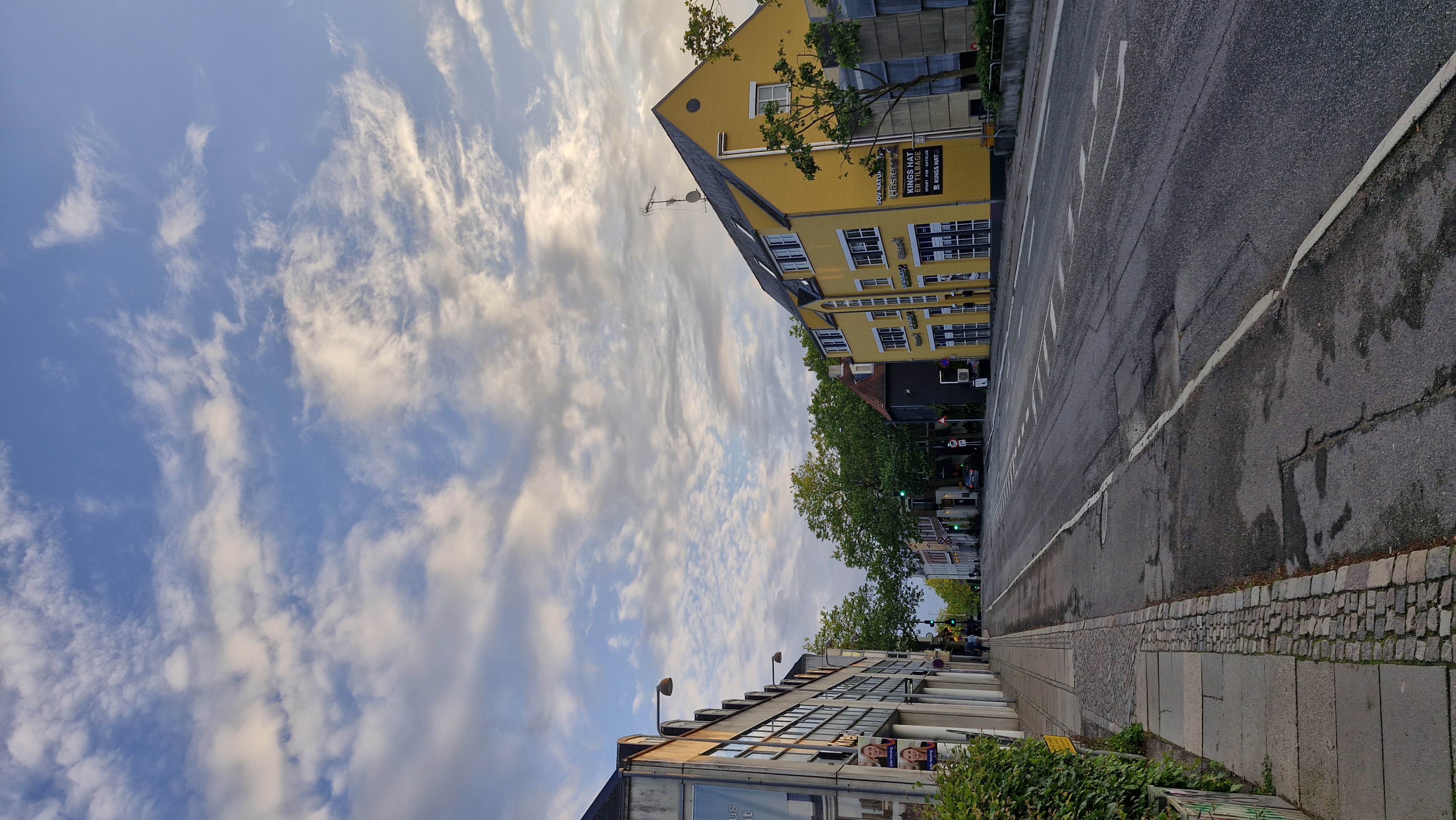
Typical Danish streets often have a mix of architectural styles, reflecting the country's history and blend of modern and traditional elements. Cycling is a very common mode of transport and streets are designed to accommodate cyclists. The bright colorful buildings are a very distinct element of the urban landscape.
📍Copenhagen
1–10 of 22 photos