Palazzo Beneventano del Bosco
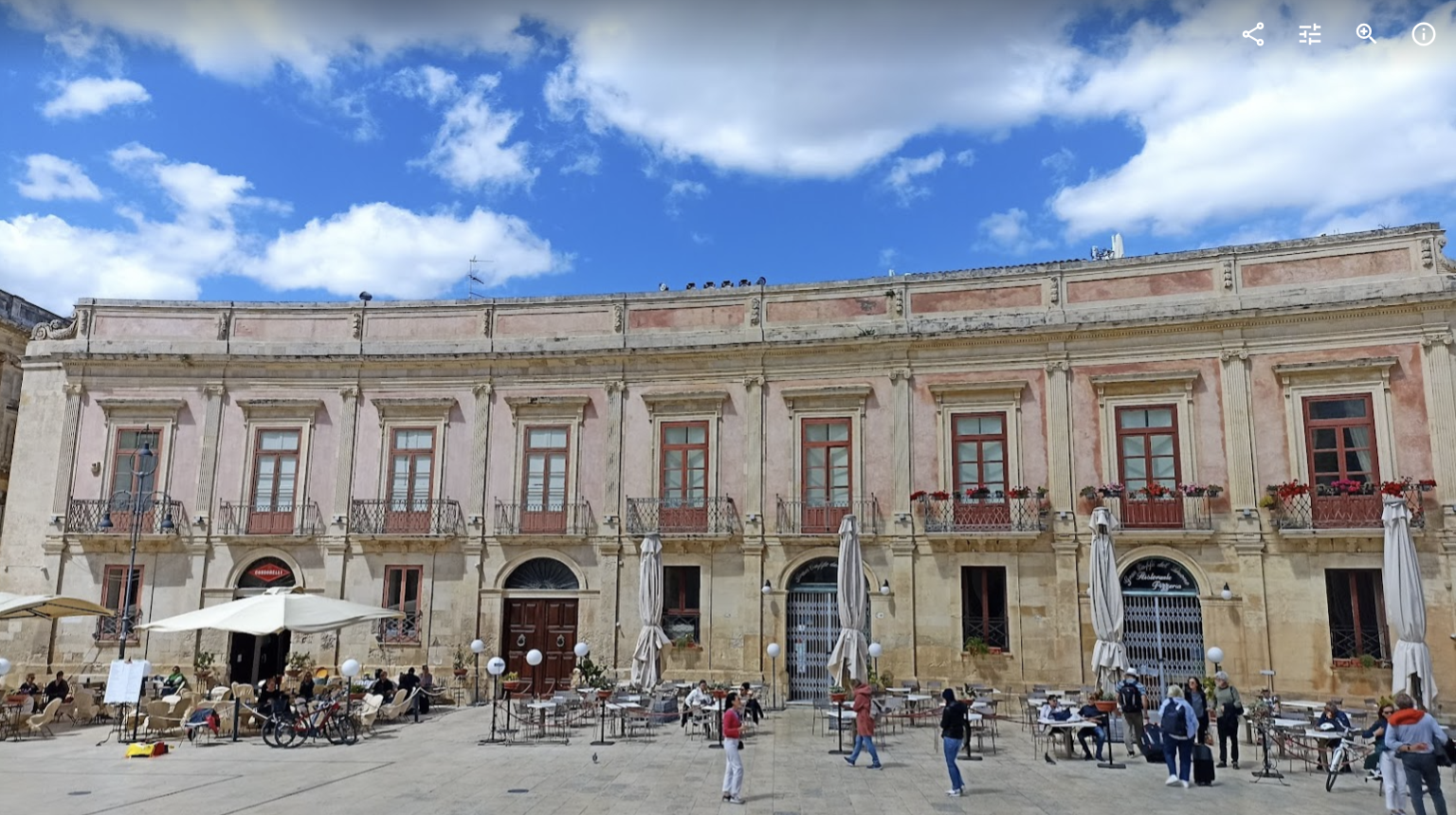
Palazzo Beneventano del Bosco is a notable example of Sicilian Baroque architecture in Syracuse, Sicily. Originating in the Medieval period with subsequent modifications, the palace attained its present form in the late 18th century under architect Luciano Caracciolo. Its elegant facade and ornate details contribute to the architectural richness of the Piazza del Duomo, making it a prominent landmark in the city's historic center.
📍Syracuse, Sicily
Fountain of Arethusa
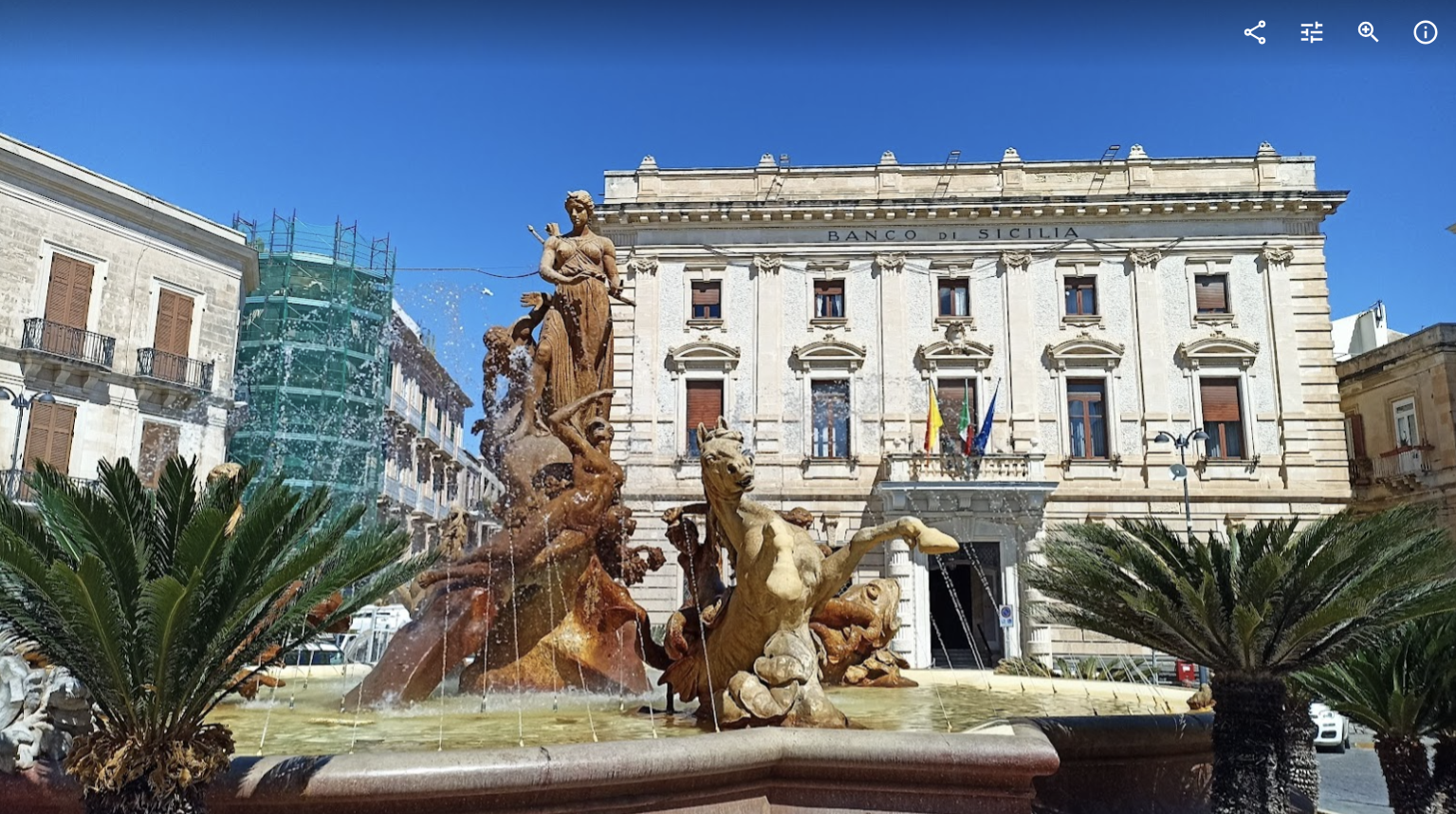
The Fountain of Arethusa is a monument in Syracuse, Sicily. It is linked to the ancient Greek myth of Arethusa, a nymph who was transformed into a spring by Artemis to escape the advances of the river god Alpheus. According to legend, Alpheus followed her all the way from Greece to Syracuse, where he mingled his waters with the spring.
📍Syracuse, Sicily
Cannoli
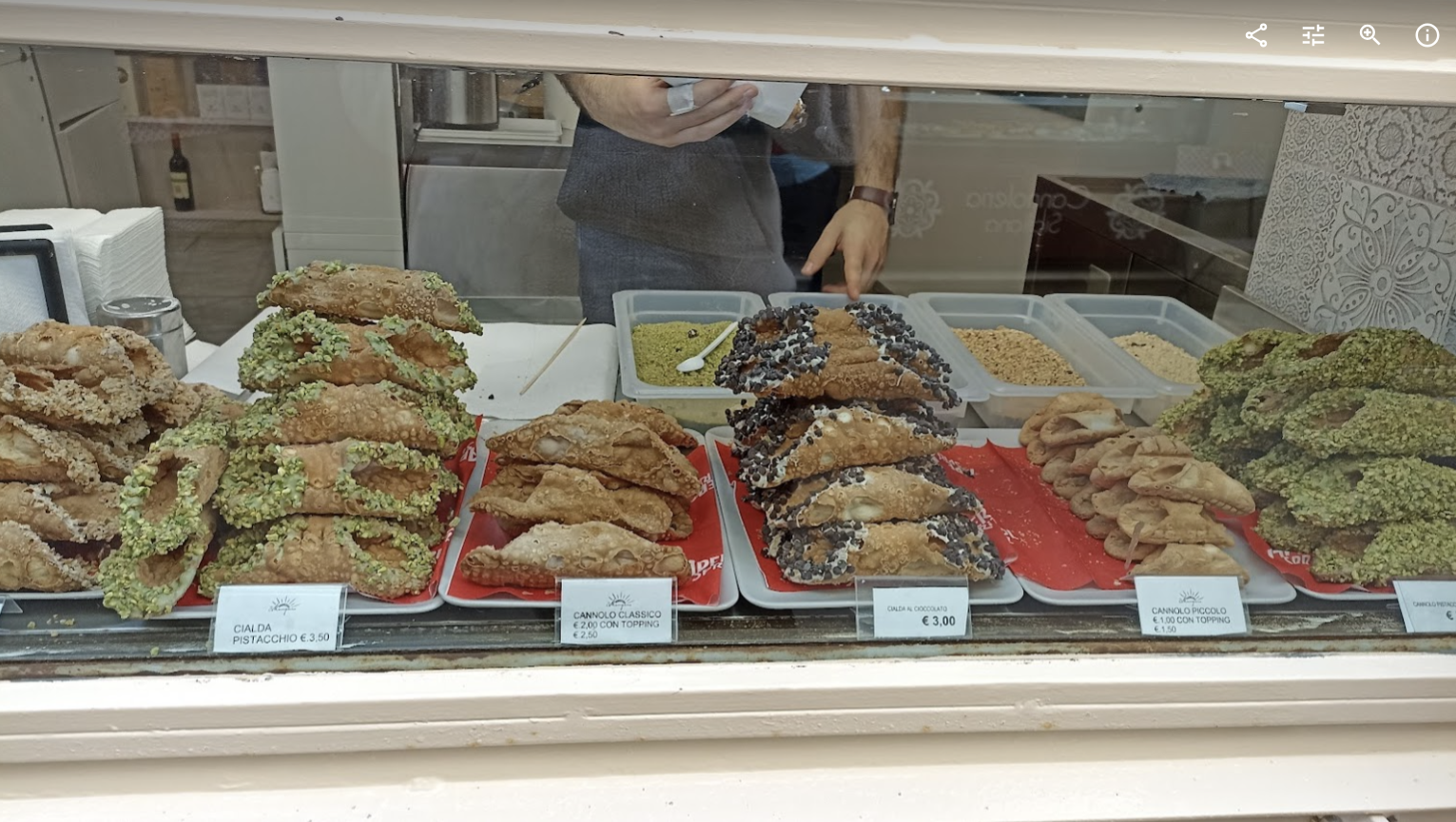
Cannoli are Sicilian pastries consisting of tube-shaped shells of fried pastry dough, filled with a sweet, creamy filling usually containing ricotta. They originated in the area of Palermo and Messina and were historically prepared during Carnevale season. Today, cannoli are a year-round staple of Sicilian pastry shops and are enjoyed throughout Italy and the world.
📍Sicily
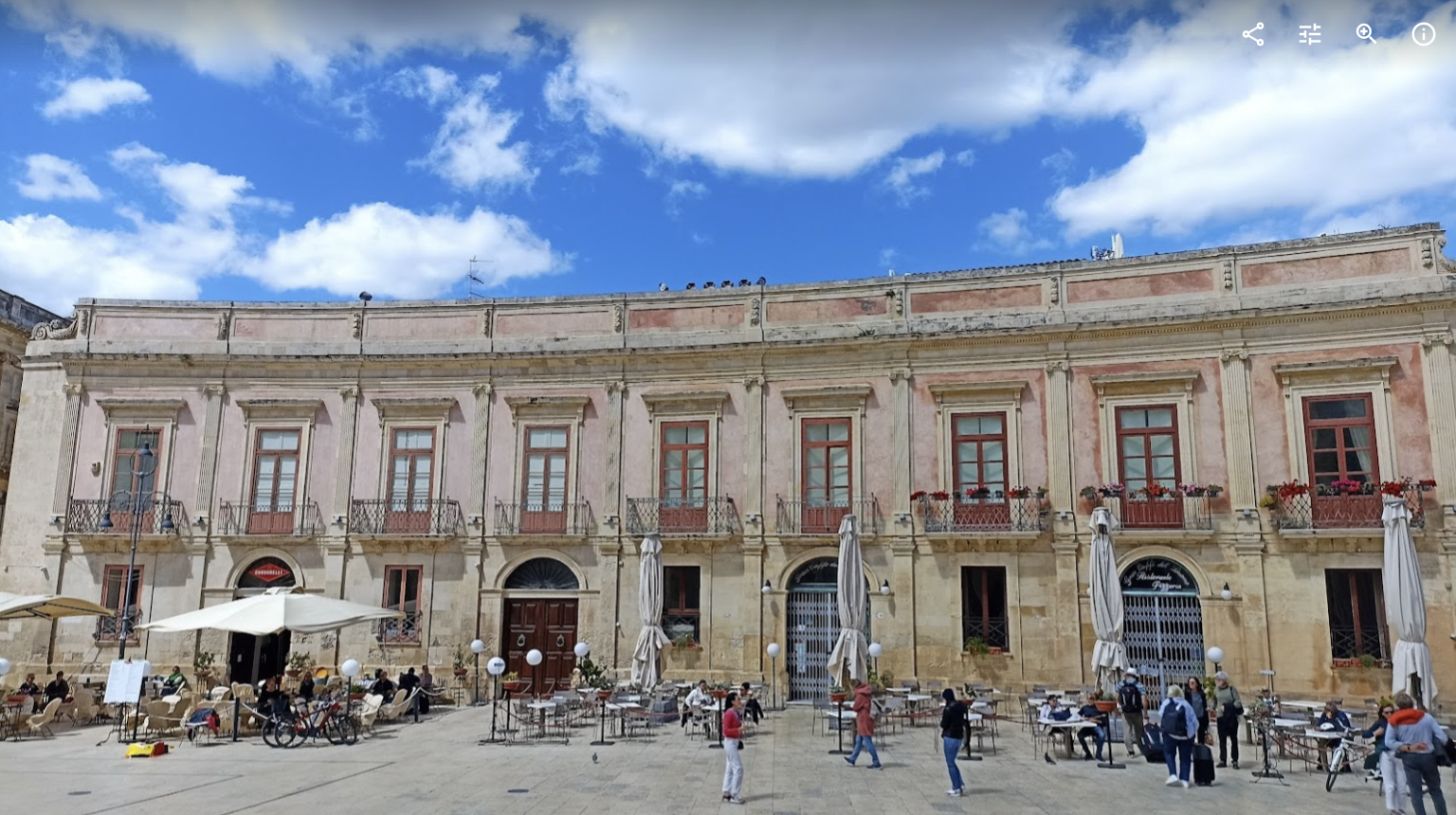
Palazzo Beneventano del Bosco
Palazzo Beneventano del Bosco is a notable example of Sicilian Baroque architecture, located in Syracuse, Sicily. Originally built in the 15th century, it was extensively remodeled in the 18th century after the 1693 earthquake. The palace's facade features intricate sculptural details and balconies, reflecting the opulent style of the era. It now serves as a cultural venue and is considered one of Syracuse's most significant historical buildings.
📍Syracuse
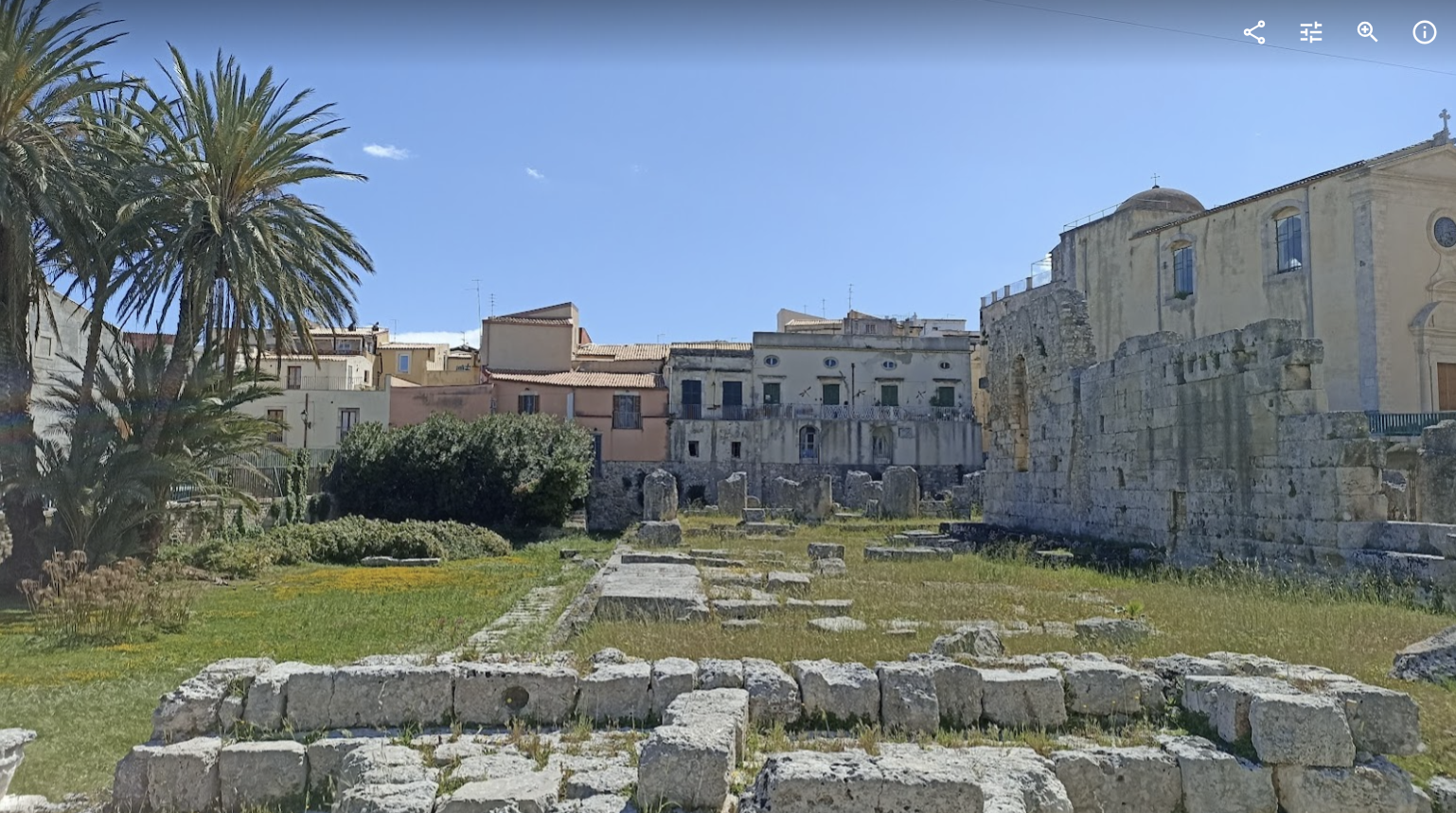
Temple of Apollo, Syracuse
The Temple of Apollo in Syracuse is the oldest Doric temple in Sicily, dating back to the early 6th century BC. The temple was dedicated to Apollo, the Greek god of music, poetry, and light, and its construction reflects the influence of Greek culture in Sicily. Over the centuries, the temple was transformed into a church, a mosque, and later a Spanish barracks, each leaving their mark on the site. Today, the ruins offer a glimpse into the rich and layered history of Syracuse.
📍Syracuse
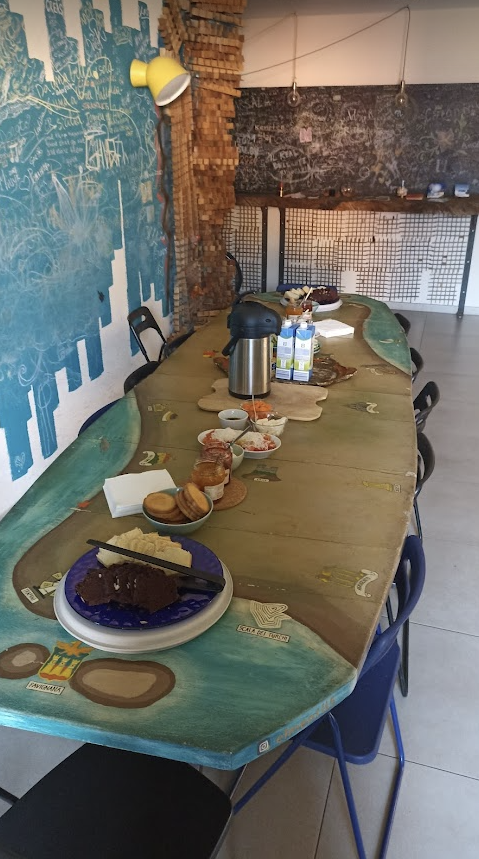
Sicilian cuisine reflects the island's rich history and diverse cultural influences, incorporating elements from Greek, Arab, Norman, and Spanish culinary traditions. Common ingredients include seafood, citrus fruits such as lemons and oranges, almonds, pistachios, and a variety of fresh vegetables. Traditional dishes often feature pasta, couscous, and rice, prepared with flavorful sauces and local spices. Sweets also play a significant role, with cannoli, cassata, and almond pastries being popular desserts.
📍Sicily
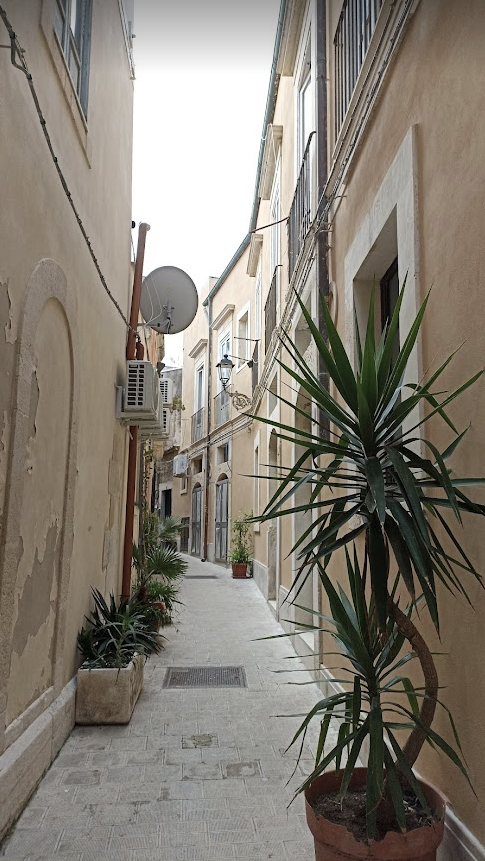
Many streets in historic Sicilian towns are narrow, reflecting defensive needs from centuries past and adapting to the island's hilly terrain. The use of local stone in the pavement and building facades creates a distinctive architectural unity. Potted plants add a touch of life and color, a common sight reflecting the Sicilian love of gardening and beautification.
📍Sicily
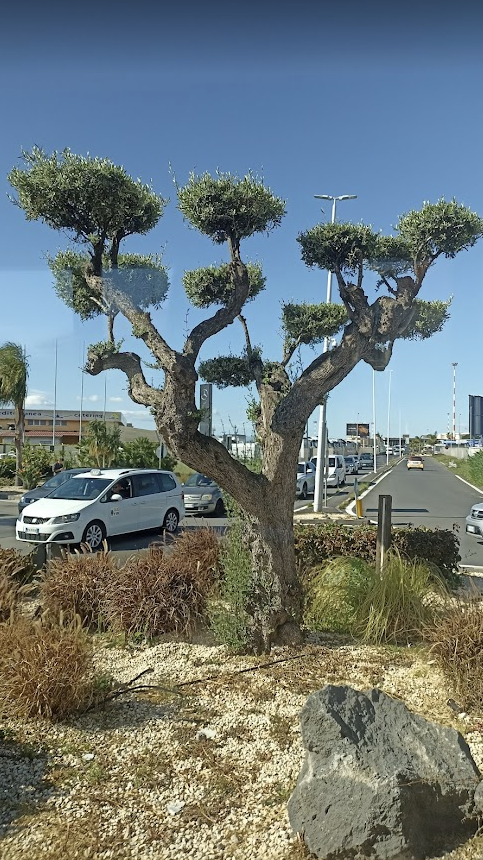
Olive trees are integral to Sicily's landscape and agriculture. They thrive in the Mediterranean climate, producing olives used for oil, table olives, and various culinary applications. The gnarled and ancient forms of olive trees tell stories of generations that have cultivated them, symbolizing resilience and the enduring connection between people and the land.
📍Sicily
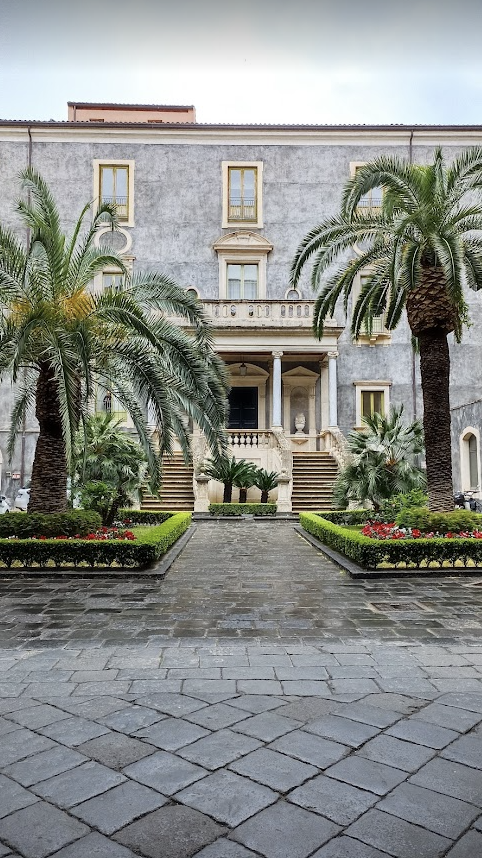
Palazzo dell'Università
The Palazzo dell'Università in Catania is the main building of the University of Catania, one of the oldest universities in Italy, founded in 1434. The palace was built in the late 17th century in the Sicilian Baroque style after the 1693 earthquake destroyed the city. Its architecture reflects the influence of the architect Giovanni Battista Vaccarini and exhibits a sober elegance characteristic of Catanese Baroque. Today, it continues to house the university's rectory and administrative offices and serves as a significant landmark in the city. There is a sculpture of a lion in the courtyard of the palace.
📍Catania
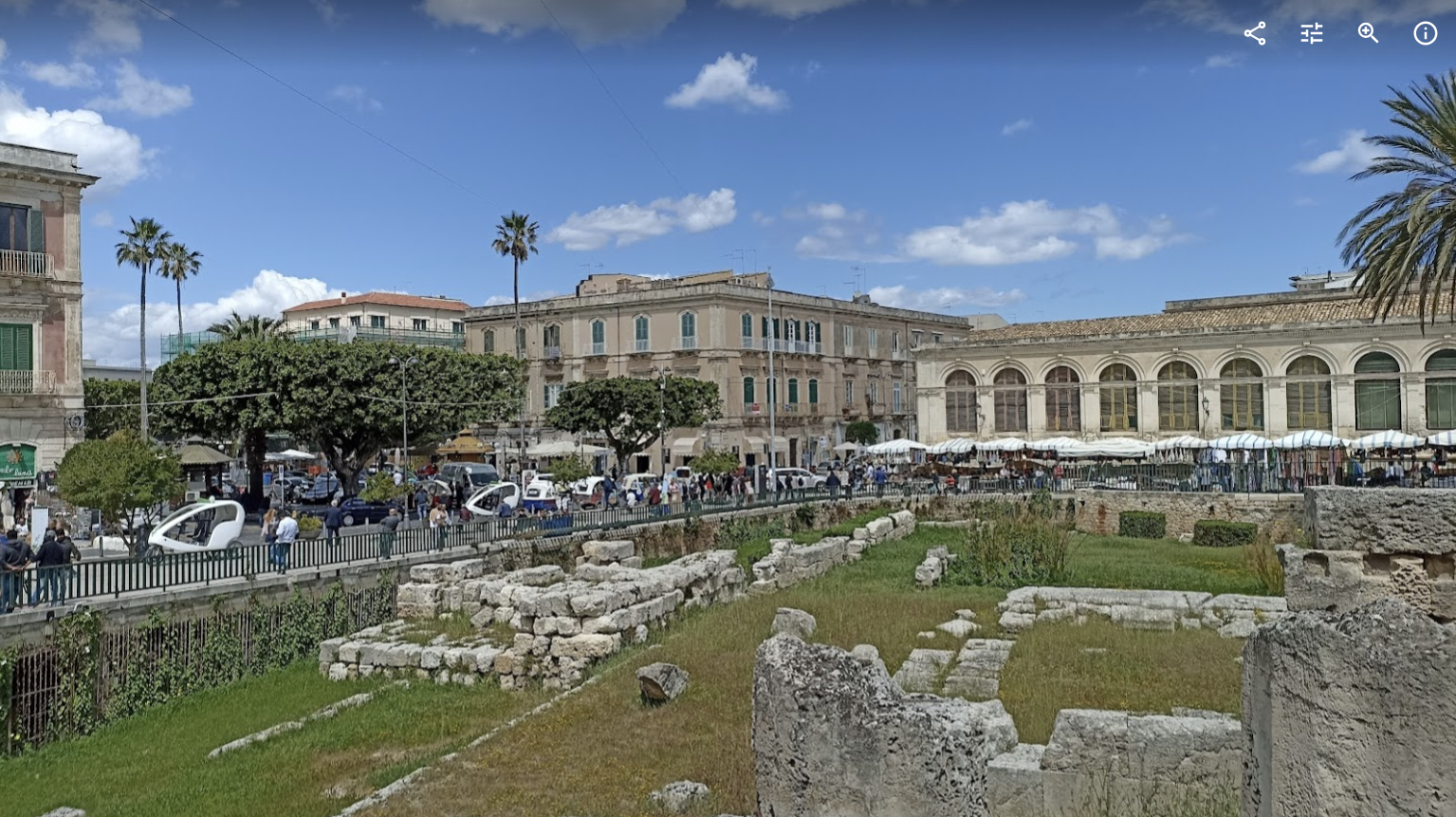
Temple of Apollo, Syracuse
The Temple of Apollo in Syracuse is one of the oldest Doric temples in Sicily and a significant landmark of ancient Greek architecture. Its construction dates back to the early 6th century BC, marking a period of monumental building activity in the Greek colonies of the region. The temple's ruins reveal a peripteral structure with a pronaos and cella, offering insight into the architectural design of early Doric temples. Its strategic location near the harbor underscored its significance as a sacred site within the ancient city’s urban landscape.
📍Syracuse
1–10 of 28 photos